
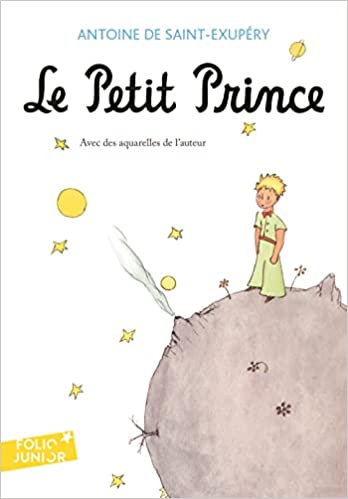
“All grown-ups were once children, but only a few of them remember it.” This opening line of The Little Prince resonates like a call to rediscover that part of our humanity that we have sometimes buried under the layers of our adult lives. Antoine de Saint-Exupéry’s work, the second most translated book in the world after the Bible, invites us on a journey much deeper than it appears: that of reconnecting with what truly gives meaning to our lives.
When Literature Becomes a Mirror of Our Exclusions
The Little Prince is not just a children’s tale. It is a manifesto against the exclusions we create ourselves: exclusion of our own sensitivity, of our capacity for wonder, of our dreams. The aviator stranded in the Sahara desert symbolizes this rupture between what we have become and what we were. His meeting with the golden-haired little prince then becomes a process of relearning, a reversed transmission where the child teaches the adult.
This dynamic of transmission, so dear to humanist approaches, reminds us that learning is never one-directional. Each of the Little Prince’s encounters with the characters of his journey — the king, the conceited man, the businessman, the lamplighter — reveals our own forms of confinement: that of power without sharing, of narcissistic recognition, of accumulation without purpose, of mechanical work devoid of meaning.
What Is Essential Is Invisible to the Eye: Toward an Intelligence of the Heart
The fox’s famous quote, “One sees clearly only with the heart. What is essential is invisible to the eye,” could be the foundation of true empathetic listening. In a professional world often dominated by numbers and immediate results, Saint-Exupéry reminds us of the importance of seeing beyond appearances, of understanding the deep needs of those around us.
This intelligence of the heart resonates particularly with the principles of nonviolent communication: observing without judging, expressing one’s feelings, identifying one’s needs and formulating clear requests. The Little Prince intuitively practices this form of communication. He doesn’t judge, he questions. He doesn’t condemn, he seeks to understand.
Taming: An Act of Creating Bonds
The concept of taming developed in the book goes well beyond a simple relationship of affection. “To tame is to create bonds,” says the fox. It is to accept responsibility for the other, to recognize their uniqueness, to invest time and attention. In our modern organizations, too often guided by immediate efficiency, this notion of taming questions us about the quality of the relationships we weave.
Creating authentic bonds requires time, presence, vulnerability. This is exactly what shared governance approaches propose: recognizing the equality by nature of each person, valuing the diversity of perspectives, building together rather than against one another.
The Rose: A Metaphor for Responsibility and Commitment
The complex relationship between the Little Prince and his rose beautifully illustrates the challenges of any genuine commitment. The rose is capricious, demanding, sometimes unbearable. Yet it is precisely the time the Little Prince spent for her that makes her so important. This notion of invested time as a creator of value overturns our relationship to efficiency and immediate performance.
In a professional context, this invites us to reconsider our modes of collaboration. The development of a team, the coaching of a colleague, the building of a corporate culture cannot be done in urgency. As with the rose, it is the time devoted, the attention given, that creates value and meaning.
A Book-Tool for Collective Intelligence
The Little Prince can become a formidable support for collective reflection. Each reader projects their own story, their own questions onto it. Used in a team work or co-development session, it allows conversations to open up about our values, our priorities, our relationship to work and to others.
What are our personal baobabs — those problems we let grow until they choke our inner planet? What is our rose — that for which we accept to take on responsibilities? Who are our foxes — those who taught us to create authentic bonds? These seemingly simple questions can reveal profound truths about our individual and collective functioning.
Rediscovering a Child’s Gaze in a Complex World
Saint-Exupéry throws us a challenge: to preserve our capacity for wonder and our creativity in the face of the complexity of the adult world. This invitation resonates particularly in our era marked by technological acceleration and the multiplication of demands. How do we stay connected to what’s essential when everything seems urgent?
The Little Prince teaches us the art of simple questioning in the face of complexity. His seemingly naive questions — “Draw me a sheep,” “Why do you drink?,” “What are the stars for?” — remind us that the most fundamental questions are often the most powerful. They bring us back to our original intentions, to our deep motivations, far from the automatisms and habits that confine us.
In a coaching or transformation approach, this ability to ask essential questions, to return to fundamentals, is precious. It allows us to cut through rationalizations and defenses to touch what truly matters.
A Bridge Between Generations and Perspectives
One of the strengths of The Little Prince lies in its ability to create bridges between ages. A child finds a captivating story in it, a young adult discovers existential questions, an older person rediscovers forgotten truths. This universality makes it a valuable tool for fostering intergenerational exchanges.
In a context where the transmission of knowledge and the inclusion of all generations are major issues, Saint-Exupéry’s work reminds us that essential values transcend eras. Friendship, responsibility, authenticity, creativity are not outdated notions but timeless fundamentals.
This reading, or rereading, of The Little Prince could also enrich your reflection if you explore other works questioning our relationship to the world, such as Steppenwolf by Hermann Hesse, which also addresses the quest for authenticity and the duality of the human being.
Taking Action: What If We Took Care of Our Rose?
Reading or rereading The Little Prince is not a simple nostalgic exercise. It is an invitation to concrete action: identifying what truly matters to us, taking on our responsibilities, creating authentic bonds, asking essential questions. In our personal as well as professional lives, these principles can guide our choices and our commitments.
Perhaps it is time to ask ourselves: what is our rose? Do we really take care of what is important to us? Do we create genuine bonds or do we stay on the surface? Do we keep our capacity for wonder or have we let the baobabs invade our inner planet?
The Little Prince reminds us that we are responsible for what we have tamed. This responsibility is not a burden but a privilege: that of giving meaning to our actions, of creating value through our commitment, of contributing to a world where the essential — human bonds, authenticity, creativity — reclaims its central place.
So, as Saint-Exupéry suggests, let’s take the time to draw our sheep, to tame our fox, to take care of our rose. For it is in these seemingly simple gestures that the deepest transformations take root.