When Curiosity Becomes an Act of Inclusion
In 1986, a revolutionary text laid the foundations of an ethic that resonates today with 1Clusif’s mission: turning curiosity, learning and transmission into levers of inclusion in the digital world.
At the Origins: A Hacker’s Cry in 1986
On January 8, 1986, shortly after his arrest, Loyd Blankenship, known by the pseudonym “The Mentor,” wrote a text that would become one of the cornerstones of digital culture: The Conscience of a Hacker, more commonly known as the Hacker Manifesto. Published in the underground magazine Phrack, this short essay does more than describe a marginal community, it lays the foundations of a philosophy that transcends the decades.
This text is not a technical manifesto, but a cry from the heart, a declaration of identity. It expresses the frustration of curious minds trapped in unsuited education systems, the thirst to learn in a world that confuses knowledge with conformity. “My crime is that of curiosity,” writes The Mentor, pointing to a society that criminalizes intellectual exploration rather than encouraging it.
The Values of the Manifesto: An Echo of 1Clusif’s Mission
Rereading the Hacker Manifesto today, it is impossible not to see a deep resonance with the values carried by 1Clusif. This convergence is no coincidence: it reveals that the exclusions denounced in 1986 are still relevant today, and that the solutions imagined by pioneering hackers find their continuation in professional inclusion initiatives.
Equality by Nature: Beyond Appearances
The manifesto states: “We exist without skin color, without nationality, without religious bias… and you call us criminals.” This vision of a community transcending social barriers echoes 1Clusif’s first value: equality by nature. In the world of code and digital technology, what matters is not origin, age or gender, but the ability to learn, create and contribute.
It is precisely this philosophy that guides 1Clusif’s actions in its fight against professional exclusion related to age, origin or gender. Digital technology offers a playing field where skills can be expressed without the discriminatory filters of the traditional world.
Curiosity as an Engine of Learning
At the heart of the Hacker Manifesto is a sharp critique of the education system. “I’m smarter than most of the other kids, this crap they teach us bores me,” recounts The Mentor. This frustration with unsuitable teaching resonates with 1Clusif’s mission of putting learning in the service of inclusion.
Hackers have always been self-taught, insatiable explorers. They embody this thirst for knowledge that 1Clusif seeks to nurture through coding skill development and personalized mentoring. Because learning, in the hacker spirit as in 1Clusif’s DNA, is not a passive act but an active exploration, a constant experimentation.
Transmission: Sharing Knowledge to Reduce Exclusion
While the Hacker Manifesto celebrates personal discovery, hacker culture as a whole has always been built on sharing knowledge. The first hackers documented their discoveries, created tutorials, formed mutual support communities. This ethic of transmission is one of 1Clusif’s pillars.
Through coaching, co-development and collective intelligence actions, 1Clusif carries on this spirit of transmission. As in open-source communities where everyone contributes according to their abilities, the association creates bridges between learners and professionals, between academic knowledge and field expertise.
The Hacker Mindset: Open-Source Culture and Responsibility
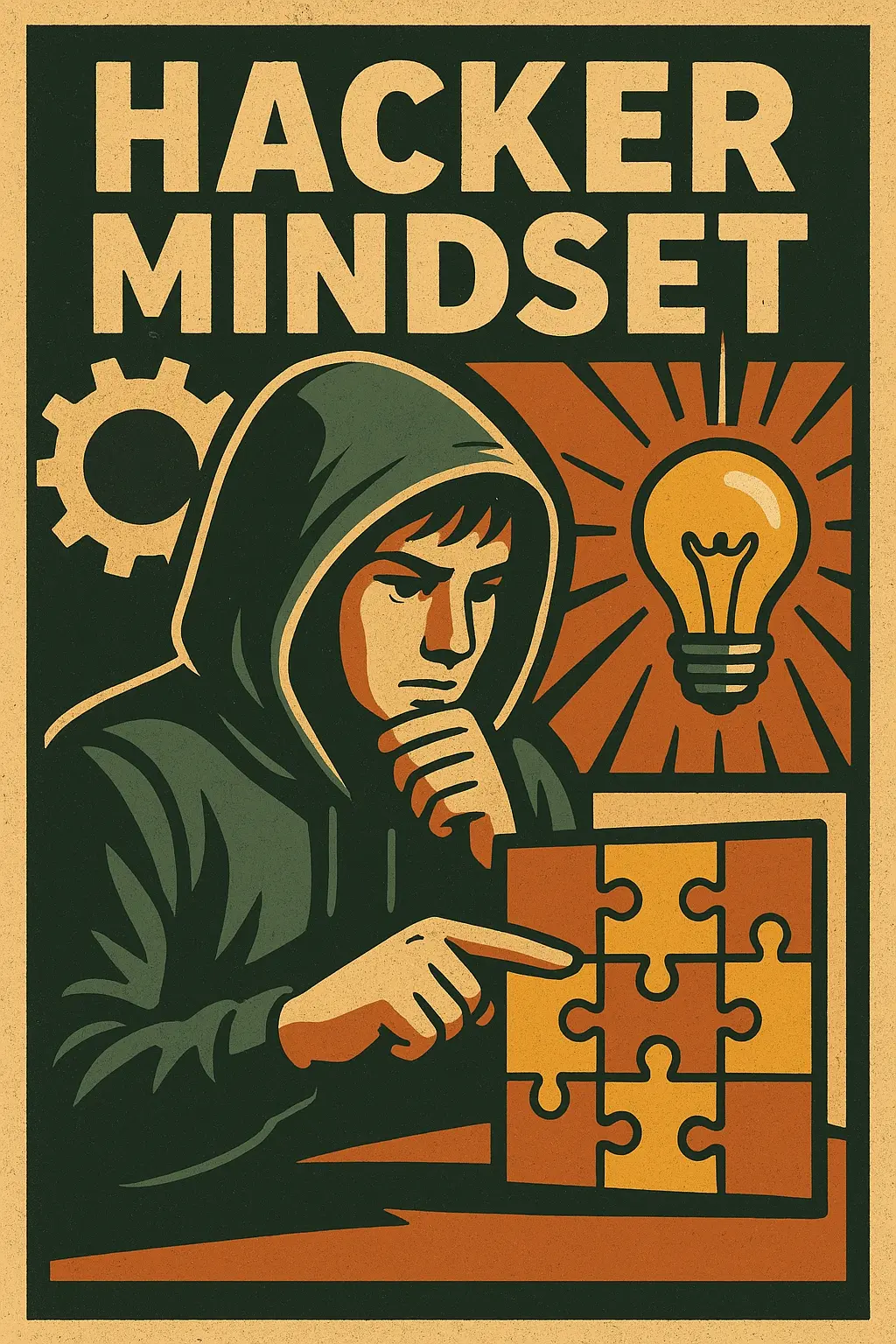
1Clusif fully embraces this legacy by claiming to carry “open-source culture and the hacker mindset.” But what does this hacker mindset really mean in 2025?
Open Source as a Model of Organization
Open-source culture, the spiritual child of the Hacker Manifesto, rests on simple but revolutionary principles: transparency, collaboration and continuous improvement. It rejects secrecy and the hoarding of knowledge in favor of collective intelligence.
These same principles run through the practices 1Clusif promotes when we support companies on agile methods or on shared governance models like holacracy and sociocracy. We spread them in the business world because they made the success of free software: autonomy, distributed responsibility, collective creativity.
Responsibility: The Necessary Counterpart of Freedom
The Hacker Manifesto ends with a strong statement: “Yes, I am a criminal. My crime is that of curiosity.” But this claim comes with an implicit ethic: using technology to “expand our horizons” and “keep the world free,” not to cause harm.
This tension between freedom and responsibility is found in 1Clusif’s values. Entrepreneurial spirit and creativity must be exercised within a framework of responsibility, whether social, environmental or ethical. Training people in emerging technologies (AI, blockchain, big data) also means training them in their responsible use.
From Manifesto to Practice: Inclusion Through Code
How do we move from the founding text to concrete action? This is where 1Clusif’s approach takes on its full meaning, translating the ideals of the Hacker Manifesto into inclusion programs.
Building Bridges Between Training and Business
One of the observations of the Hacker Manifesto is that curious and creative minds often clash with rigid structures. 1Clusif responds to this issue by creating “airlocks” between the world of training and that of business, allowing learners to develop their technical skills while being supported in their professional integration.
This approach avoids the pitfall of training disconnected from reality, while offering companies the opportunity to discover talent from atypical backgrounds but driven by that curiosity and thirst to learn characteristic of the hacker mindset.
Experimenting with Emerging Technologies
Hackers have always been at the cutting edge of innovation, exploring possibilities even before they become standardized. 1Clusif carries on this pioneering spirit by creating experimentation labs.
These labs are not mere technological showcases, but spaces for learning and co-construction where participants can experiment, make mistakes, learn. It is in this dynamic of exploration that true digital competence is forged.
Fostering Diversity in Tech
While the Hacker Manifesto proclaims equality beyond appearances, it must be noted that the tech world remains marked by gender-based and generational exclusion. 1Clusif takes on this problem head-on by actively working for the feminization of digital professions and by fostering cross-generational synergies.
Because the hacker mindset has neither age nor gender: it is defined by an intellectual posture, an ethic of curiosity and sharing. Opening up coding and tech professions to diversity means staying true to the manifesto’s original spirit.
2025: A Manifesto Still Alive
Nearly forty years after it was written, the Hacker Manifesto has lost none of its relevance. It reminds us that technology is not neutral, that it carries values, and that these values must be those of openness, curiosity, equality and sharing.
New Digital Exclusions
In 1986, The Mentor denounced an education system unsuited to curious minds. In 2025, exclusions have evolved but have not disappeared. Digital illiteracy affects millions of people, access to digital training remains unequal, and algorithmic bias reproduces and amplifies social discrimination.
Faced with these challenges, 1Clusif’s approach, nourished by hacker ethics, offers concrete responses: accessible training, personalized mentoring, valuing atypical paths, transmission of knowledge. So many ways to reduce the technological exclusions denounced since the very origin of the movement.
Entrepreneurial Spirit in the Service of the Collective
The Hacker Manifesto celebrates the individual (“I am a hacker”), but immediately places itself within a collective (“we’re all alike,” “you can’t stop us all”). This tension between individual autonomy and collective strength is found in 1Clusif’s entrepreneurial vision.
Entrepreneurial spirit, far from being synonymous with individualism, becomes here an engine for creating collective value. It is the entrepreneur who, driven by the hacker mindset, seeks not only to create a profitable business, but to build adaptable, inclusive, learning organizations.
Conclusion: Hacking Exclusion
If we had to sum up in one phrase the Hacker Manifesto’s legacy for 1Clusif, it would be this: hack exclusion. To hack, meaning to explore, understand, work around obstacles, find solutions where the system sees only dead ends.
The technological exclusions 1Clusif fights are so many rigid systems that deserve to be “hacked” in the noble sense of the term. It’s about finding alternative paths, creating bridges where walls exist, turning curiosity into skill and learning into inclusion.
Forty years after it was written, the Hacker Manifesto reminds us that the digital revolution will only be truly inclusive if it stays true to its original values: equality, curiosity, transmission, responsibility and creativity. Values that 1Clusif brings to life every day, not as slogans, but as concrete practices in the service of inclusion.
“My crime is that of curiosity.” This sentence from The Mentor could be the motto of everyone at 1Clusif and in the open-source community who refuses to let access to knowledge and technology remain a privilege. Because in a digital world, being curious is not a crime: it is a right, and even a duty of transmission.
To go further:
- Discover 1Clusif’s values and mission
- Explore our reading section to enrich your digital culture
- Deepen your knowledge of the Scrum method, an embodiment of agile values