1984 by George Orwell: When Fiction Anticipates Our Digital Reality
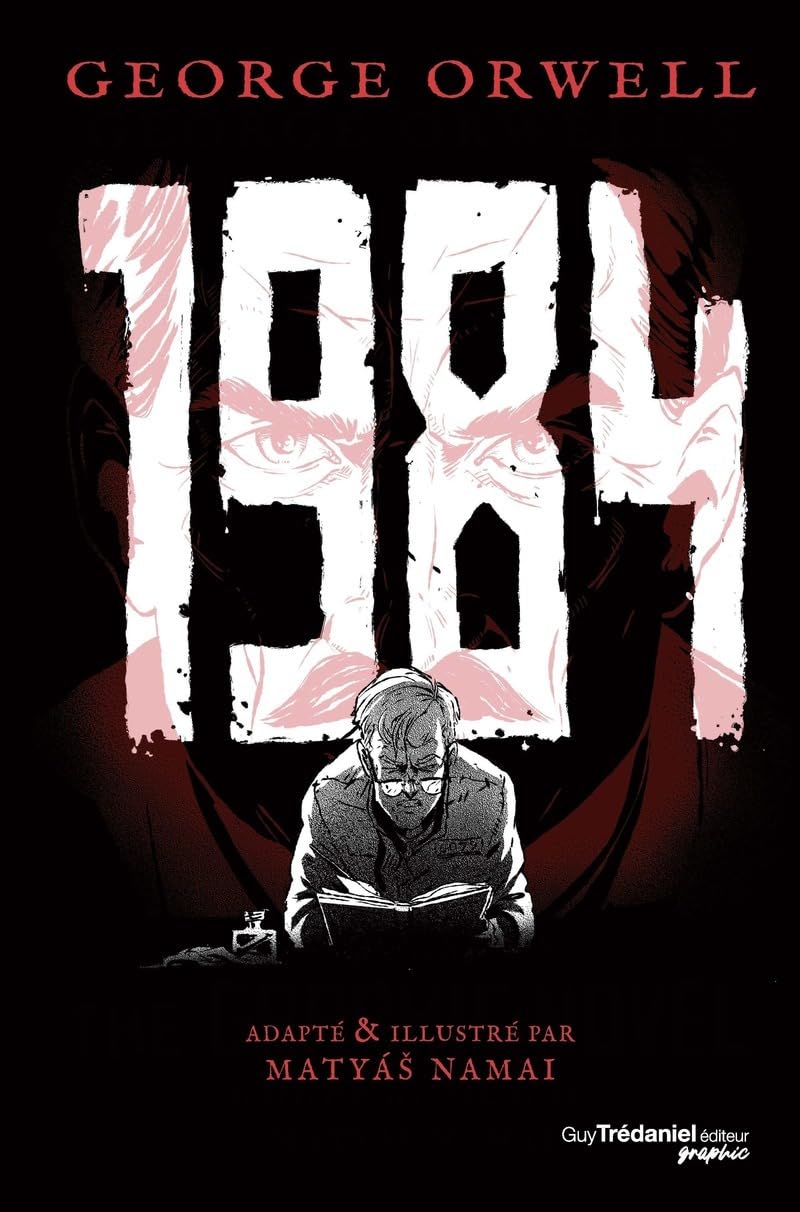
Published in 1949, 1984 by George Orwell remains one of the most influential novels of the 20th century. This masterful work, far more than a simple dystopian fiction, resonates with troubling accuracy in our hyperconnected society. At a time when digital surveillance, personal data protection and the manipulation of information are at the forefront, Orwell’s masterpiece has never been more relevant.
The plot: A world under total surveillance
The story takes place in Oceania, a totalitarian state ruled by the Party and its omniscient leader, Big Brother. Winston Smith, an official at the Ministry of Truth, is tasked with rewriting history according to the regime’s needs. In a world where telescreens monitor every gesture, where the Thought Police track down the slightest ideological deviation, Winston dares to do the unthinkable: keep a diary and fall in love.
This chilling story plunges us into a society where truth is malleable, where language itself is instrumentalized to limit thought, and where the individual exists only through and for the Party.
The major themes: Concerns more current than ever
Generalized surveillance and social control
The concept of Big Brother, this omnipresent figure who watches every citizen, finds a particular echo in our time. The telescreens of the novel, which constantly watch and listen, foreshadow our surveillance cameras, our smartphones and our connected voice assistants.
In the professional and digital world we know, the question of surveillance takes on a new dimension: recommendation algorithms, user profiling, massive data collection. The technologies we use every day can become tools of control and exclusion, as highlighted by 1Clusif’s mission in favor of digital inclusion.
Manipulation of information and post-truth
The Ministry of Truth, where Winston works, constantly rewrites the past so that it matches the official version of the present. This concept of “permanent revisionism” resonates strongly with today’s phenomena of fake news, disinformation and the manipulation of facts on social media.
The Party’s famous slogan, “War is peace, freedom is slavery, ignorance is strength,” perfectly illustrates this inversion of the meaning of words and reality that characterizes our post-truth era.
Newspeak: Control through language
Orwell created “Newspeak,” an impoverished language designed to make it impossible to express subversive thoughts. By reducing vocabulary and simplifying grammar, the Party limits the very capacity to think.
This reflection on the power of language remains crucial today. In the world of digital technology and business, jargon and euphemisms can serve to mask disturbing realities or impose a single way of thinking. Open-source culture and the hacker mindset, valued by 1Clusif, are precisely opposed to this standardization of thought by favoring creativity and free expression.
Why read 1984 today?
A mirror held up to our digital society
In the age of big data, facial recognition and predictive algorithms, 1984 is no longer just anticipatory fiction but almost a manual for analyzing our present. The novel invites us to question our relationship with technology, privacy and individual freedom.
For the digital professionals, developers and entrepreneurs that 1Clusif supports, this reading offers an essential critical perspective on the tools we create and use. It reminds us that technology is never neutral and can serve emancipation just as well as control.
An invitation to resistance and critical thinking
Winston Smith represents the individual who refuses to submit, who dares to think for himself despite the risks. His struggle, though tragic, embodies the need to preserve one’s critical mind and capacity for independent judgment.
This intellectual resistance fits perfectly with the values of transmission and responsibility carried by the 1Clusif movement. Faced with technological exclusion and the risks of standardization of thought, cultivating one’s intellectual autonomy becomes a necessary act of resistance.
An accessible and captivating classic
Beyond its philosophical and political scope, 1984 remains a remarkably well-written novel, with a sustained pace and a gripping plot. The love story between Winston and Julia, the psychology of the characters, the oppressive descriptions of this grey, dehumanized world: everything contributes to making the reading both captivating and disturbing.
Lessons for our time
Vigilance against attacks on freedoms
The novel teaches us that the loss of freedom never happens brutally but through small successive concessions. Every renunciation of our privacy, every acceptance of increased surveillance “for our safety” brings us closer to Orwell’s world.
The importance of education and transmission
In 1984, ignorance is a tool of control. Conversely, education, learning and transmission – founding values of 1Clusif – are bulwarks against manipulation and exclusion. Training people in technology, developing critical thinking, passing on knowledge: all are acts of resistance against the standardization of thought.
The need for an ethical and inclusive digital world
The novel reminds us of the urgency of building a digital world that respects the individual, is inclusive and emancipatory. Technologies must not be tools of exclusion or surveillance but levers of inclusion and creativity, as advocated by the 1Clusif movement.
In conclusion: An essential novel
1984 by George Orwell is not just a classic of dystopian literature: it is a tool for understanding our contemporary world. In a society where digital technologies are profoundly transforming our ways of living and working, where questions of surveillance, personal data and the manipulation of information are more relevant than ever, this novel offers indispensable insight.
For all those interested in digital issues, questions of inclusion and technological exclusion, and the relationship between the individual and the system, 1984 remains essential reading. It reminds us that freedom of thought, creativity and critical thinking – values at the heart of the hacker mindset – are never permanently acquired and must be defended at all times.
So, have you read 1984? And above all, what did you think of it in light of our current digital reality?
About this section: “A bit of reading” explores works that help us think about the world of digital technology, inclusion and social transformation. Because reading is also a way to resist and to become emancipated.
Recommended edition: 1984 by George Orwell is available from many French-language publishers. The Folio edition remains a safe choice, with a quality translation and an accessible paperback format.
Estimated reading time: 8-10 hours