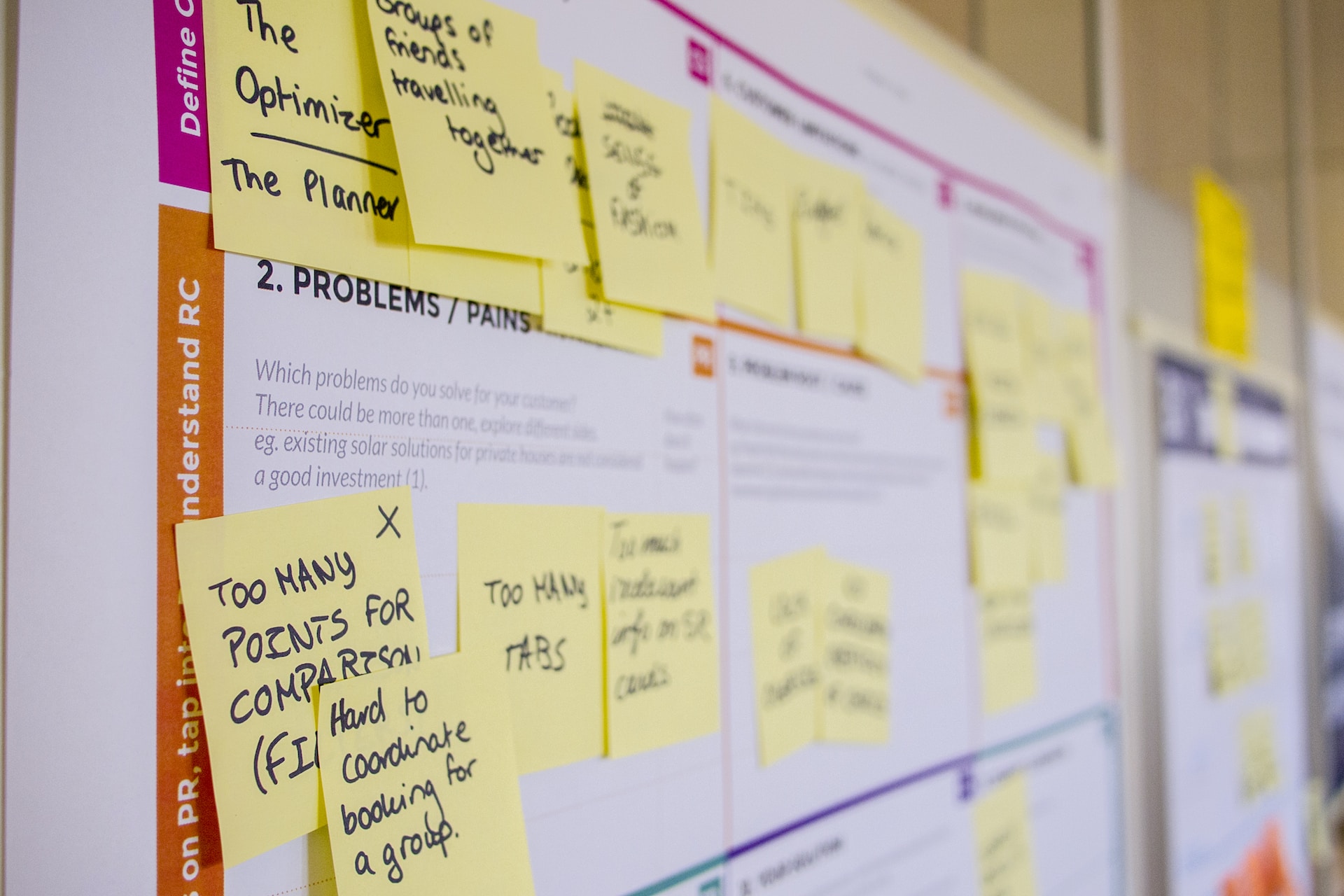
Photo by Parabol | The Agile Meeting Toolbox on Unsplash
Imagine a team where every member knows exactly what to do, where communication flows smoothly, where problems are identified and resolved quickly, and where the final product truly matches the customer’s expectations. Too good to be true? Yet that is the promise of Scrum.
Scrum is the most popular agile framework in the world. Born in the 1990s for software development, it has spread into sectors as varied as marketing, education, event management, or even construction. According to a VersionOne study, 75% of agile teams use Scrum or a variant of Scrum.
But what exactly is Scrum? A set of meetings? A method to “go faster”? A rigid framework imposed by consultants? None of that – or rather, much more than that.
Scrum is an empirical framework based on the simple but powerful idea that in complex and changing environments, you cannot plan everything in advance. You must proceed through short iterations, regularly inspect what you produce, and adapt your approach based on what you learn.
But Scrum is also – and above all – a collaborative philosophy that values team autonomy, radical transparency, and continuous improvement. It is this human dimension that particularly interests 1Clusif: Scrum, when authentically practiced, is not a tool of managerial control, but a lever for collective emancipation.
For 1Clusif, a humanist movement committed to reducing professional exclusion, Scrum represents a model of shared governance where every voice counts, where everyone’s skills are valued, and where collective intelligence is mobilized in the service of shared goals.
This article offers you a complete journey into the world of Scrum: from its origins to concrete practices, from roles to ceremonies, from benefits to pitfalls to avoid. Whether you’re a curious beginner or a practitioner looking to deepen your knowledge, you’ll find here the keys to understanding, applying and succeeding with Scrum – effectively AND humanely.
At the Origins of Scrum: Why and How Was It Born?
The Observation: The Failure of Traditional Waterfall Methods
In the 1980s-1990s, software development mostly followed a waterfall model: complete specifications → design → development → testing → delivery. This model, inherited from industrial engineering, seemed logical: plan everything, then execute.
Problem: it didn’t work. The Standish Group’s Chaos Report (1995) revealed alarming figures: only 16% of software projects were delivered on time, on budget, and with all planned features. 31% of projects were simply abandoned.
Why these failures? Several reasons:
- Needs change: Over 18 months of development, the market, the technology, or the client’s priorities evolve. The delivered product addresses obsolete needs.
- Complexity is underestimated: Initial specifications, however detailed, cannot anticipate all the technical problems that will emerge.
- Feedback arrives too late: The client only sees the product at the end. If it doesn’t match their expectations, it’s too late (and expensive) to change it.
- Teams are disengaged: Developers execute specifications without understanding the “why,” which limits their creativity and motivation.
Japanese Inspiration: Lean and the Rugby Metaphor
In 1986, two Japanese researchers, Hirotaka Takeuchi and Ikujiro Nonaka, published a landmark article in the Harvard Business Review: “The New New Product Development Game.” They studied how companies like Honda, Canon and Fuji-Xerox develop new products quickly and successfully.
Their discovery: these companies don’t use a sequential (relay-race) approach, but a “rugby” approach where the whole team moves forward together, passes the ball, and adapts based on the field. Hence the term “Scrum” – the rugby scrum where the team regroups to restart play.
Characteristics of this approach:
- Autonomous, multidisciplinary teams: No silos, everyone collaborates
- Overlapping phases: Design and development happen in parallel
- Continuous learning: You test, you learn, you adjust
- Subtle control: Team autonomy with regular checkpoints
The Formalization of Scrum (1990s)
In 1993, Jeff Sutherland, then VP Engineering at Easel Corporation, experimented with a new process inspired by the Takeuchi and Nonaka article. He collaborated with Ken Schwaber, and together they formalized what would become Scrum.
In 1995, they officially presented Scrum at a conference. In 2001, they co-signed the Agile Manifesto with 15 other pioneers, positioning Scrum as a concrete implementation of agile values.
In 2010, Schwaber and Sutherland published the Scrum Guide, the official reference for Scrum, regularly updated (latest version: November 2020).
The Foundations of Scrum: Values, Pillars and Principles
Before diving into practices, let’s understand the philosophical foundations of Scrum.
The 5 Scrum Values
The Scrum Guide identifies 5 fundamental values that must guide the team’s behavior:
1. Commitment
The team commits to reaching the sprint goal and supporting each other. This doesn’t mean “an absolute delivery promise,” but a commitment to do one’s best with the information available.
2. Courage
Having the courage to work on difficult problems, to admit mistakes, to say “no” when necessary, to question the status quo.
3. Focus
Focusing on the sprint goal and minimizing distractions. Saying “no” to requests that would destabilize the current sprint.
4. Openness
Being transparent about the work, progress, difficulties. Sharing knowledge. Accepting feedback.
5. Respect
Respecting the skills, expertise and humanity of every team member. Trusting everyone’s abilities.
The 3 Pillars of Empiricism
Scrum rests on an empirical approach: you learn by doing. This approach relies on three pillars:
1. Transparency
All aspects of the process that impact the outcome must be visible to those managing the outcome. No hiding, no withholding information.
2. Inspection
Scrum artifacts and progress must be regularly inspected to detect undesirable variances. Scrum ceremonies (Daily, Review, Retrospective) are moments of inspection.
3. Adaptation
If inspection reveals that an aspect of the process deviates from acceptable limits, the process or the product must be adjusted quickly to minimize further deviation.
The virtuous cycle: Transparency → Inspection → Adaptation → Transparency…
The Roles in Scrum: Who Does What?
Scrum defines three distinct roles, each with clear responsibilities. Important: these are roles, not necessarily job titles.
The Product Owner (PO): The Voice of the Customer
Responsibilities
- Maximize product value: Decides which features to develop and in what order
- Manage the Product Backlog: An ordered list of everything that needs to be done. The PO orders it according to business value
- Clarify needs: Ensures the team understands what needs to be done and why
- Accept or reject work: Validates that delivered work meets acceptance criteria
Qualities of a Good Product Owner
- Knowledge of the business domain and users
- Availability for the team
- Decision-making capacity (empowerment)
- Clear product vision
- Knowing how to say “no” to low-value requests
Common Mistake
The “proxy PO”: a PO who doesn’t have decision-making power and must constantly seek validation from their hierarchy. This slows everything down and disempowers the team.
The Scrum Master (SM): The Facilitator and Guardian of the Process
Responsibilities
- Facilitate Scrum events: Runs the ceremonies (or ensures they happen)
- Remove obstacles: Identifies and resolves (or helps resolve) blockers preventing the team from moving forward
- Protect the team: From interruptions, untimely changes in priorities, unreasonable requests
- Coach the team: On self-organization, collaboration, agile practices
- Educate the organization: About Scrum and agility to create a favorable environment
Qualities of a Good Scrum Master
- Excellent facilitation and communication skills
- Patience and empathy
- Deep knowledge of Scrum and agility
- Ability to navigate conflicts
- Servant leadership
What the Scrum Master Is NOT
- ❌ A project manager who gives orders
- ❌ A secretary who takes notes
- ❌ A foreman who watches that everyone is working
- ❌ The sole person responsible for the sprint’s success
The Development Team (Dev Team): The Doers
Responsibilities
- Deliver a functional product increment every sprint
- Self-organize the work: The team decides how to reach the sprint goal
- Collaborate closely: No silos, everyone helps everyone
- Estimate the work: The team estimates the complexity and workload of tasks
- Maintain quality: Testing, code review, documentation, etc.
Characteristics
- Multidisciplinary: All the skills needed to deliver are present (dev, test, UX, etc.)
- Self-organized: No internal boss, decisions are collective
- Ideal size: 3 to 9 people (the 2020 Scrum Guide says “generally 10 people or fewer”). Less than 3 = lack of skills. More than 9 = coordination problems
- Stable: Ideally, the team stays the same across several sprints to build cohesion
Scrum Artifacts: The Tangible Elements
Scrum defines three main artifacts that ensure transparency.
1. The Product Backlog: The List of Everything That Needs to Be Done
The Product Backlog is an ordered list of all known features, improvements, fixes and technical tasks for the product. It is a living document that constantly evolves.
Characteristics
- Owner: The Product Owner is responsible for it
- Ordered: Items at the top are the most important/urgent (not necessarily the biggest)
- Variable detail: Items at the top are detailed and ready to be worked on. Those at the bottom are vaguer
- Common format: User Stories (“As a [user], I want [feature] so that [benefit]”)
Example of a Product Backlog Item (PBI)
User Story: “As a user, I want to be able to filter products by category so I can find what I’m looking for more quickly”
Acceptance criteria:
- Available categories are displayed in a sidebar
- Clicking a category immediately filters the results
- You can select multiple categories (cumulative filter)
- A “Reset” button clears all filters
2. The Sprint Backlog: The Plan for the Current Sprint
The Sprint Backlog is the set of Product Backlog items selected for the sprint, plus a plan for delivering them and reaching the sprint goal.
Characteristics
- Owner: The development team is responsible for it
- Visible and transparent: Often displayed on a physical board or tool (Trello, Jira, etc.)
- Evolving during the sprint: The team can break down tasks, add some if needed to reach the goal
- Contains tasks: Each user story is broken down into concrete technical tasks
Example Breakdown
User Story: “Filter by category”
Tasks:
- Create the sidebar component (3h)
- Fetch the category list via API (2h)
- Implement the filtering logic (5h)
- Handle multiple selection (3h)
- Create the “Reset” button (1h)
- Write unit tests (4h)
- End-to-end tests (2h)
3. The Increment: The Delivered Functional Product
The Increment is the sum of all Product Backlog items completed during the current sprint AND all previous sprints. At the end of each sprint, the increment must be:
- Functional: It works, it is usable
- Tested: It meets acceptance criteria and quality standards
- Potentially releasable: It could be put into production if the Product Owner decides to
The “Definition of Done” (DoD)
The team defines a Definition of Done: the list of criteria an item must meet to be considered complete.
Example DoD:
- ✅ Code written and compliant with standards
- ✅ Unit tests written and passing (coverage >80%)
- ✅ Integration tests passing
- ✅ Code review done and approved
- ✅ User documentation updated
- ✅ Deployed to the staging environment
- ✅ Validated by the Product Owner
Scrum Events: The Ceremonies Step by Step
Scrum structures work into cycles called Sprints, punctuated by 4 events (ceremonies).
The Sprint: The Container for Everything Else
A Sprint is a fixed period of time (time-box) during which the team works to create a functional product increment.
Characteristics
- Fixed duration: Generally 1 to 4 weeks (2 weeks is most common)
- Starts immediately after the previous one: No break between sprints
- Has a clear goal: The Sprint Goal
- Protected scope: Priorities don’t change during the sprint
The Sprint Goal
This is the sprint’s business objective, expressed concisely. It gives direction and allows the team to make decisions.
Example Sprint Goal: “Allow users to filter and sort products to improve their search experience”
Event 1: Sprint Planning
Objective
Define what will be done during the sprint and how the team plans to do it.
Participants
Product Owner + Scrum Master + Development Team (all present)
Duration
Time-boxed: maximum 8 hours for a 4-week sprint (proportionally less for shorter sprints: 4h for 2 weeks, 2h for 1 week)
Proceedings
Part 1: What?
- The PO presents the goal of the sprint and the priority Product Backlog items
- The team asks questions to clarify needs
- The team selects the items it thinks it can complete during the sprint (based on past velocity)
- Formulating the Sprint Goal: Everyone agrees on the objective
Part 2: How?
- Breaking down into tasks: The team breaks each user story into concrete technical tasks
- Estimating tasks: In hours or points, to check feasibility
- Identifying dependencies: Which tasks must be done before others?
- Initial assignment (optional): Some teams already assign tasks, others prefer to do it day by day
Result
The Sprint Backlog: the list of selected items, broken down into tasks, with a plan to complete them.
Concrete Example
Context: Team of 6 developers, 2-week sprint.
Past velocity: 25 story points
PO proposes: 5 user stories totaling 30 points
Team negotiates: “30 points is too optimistic, we’ll take 3 stories (20 points) to be sure we finish them”
Sprint Goal: “Improve the users’ search experience”
Benefits
- ✅ Shared vision of the sprint goal
- ✅ Team commitment (it chose what it thinks it can do)
- ✅ Clarification of needs from the start
Points of Vigilance
- ⚠️ Don’t over-plan (leave flexibility)
- ⚠️ Don’t underestimate (better to finish early and add than not finish)
- ⚠️ Make sure everyone truly understands the user stories
Event 2: Daily Scrum
Objective
Synchronize the team daily, identify obstacles, adjust the sprint plan if necessary.
Participants
Development team (mandatory). PO and SM may attend but only speak if asked.
Duration
Time-boxed: 15 minutes maximum, standing (to keep energy up and avoid digressions)
Proceedings
Each team member briefly answers 3 questions:
- What did I do yesterday that helped the team reach the sprint goal?
- What will I do today to help the team reach the sprint goal?
- Do I see an obstacle preventing the team from reaching the sprint goal?
Alternative Format (Often More Effective)
Instead of talking about what each person is doing, we talk about what’s moving toward the goal:
- “What’s the status of story X?”
- “Can anyone help with story Y, which is blocked?”
- “Are we on track to finish everything we planned?”
This format centers the discussion on the work, not on individuals.
Concrete Example
Marie: “Yesterday I finished the filtering API. Today I’m starting the unit tests. No blockers.”
Thomas: “Yesterday I worked on the sidebar component, it’s 80% done. Today I’ll finish it and start integrating with Marie’s API. I have a question about the multi-filter logic, can we talk after the Daily?”
Sarah: “Yesterday I reviewed 3 PRs. Today I’m continuing the end-to-end tests. I have a blocker: the staging environment has been down since this morning, I can’t test.”
Scrum Master (observing): “OK, I’ll take the staging environment issue, I’ll contact the infra team right away.”
Benefits
- ✅ Total transparency on progress
- ✅ Quick identification of obstacles
- ✅ Spontaneous team coordination
- ✅ Reinforced sense of team
Points of Vigilance
- ⚠️ Don’t exceed 15 minutes: If a discussion drags on, postpone it
- ⚠️ No problem-solving during the Daily: Identify, then solve afterward with the people concerned
- ⚠️ Avoid it becoming a report to the manager: It’s a team sync, not a hierarchical report
- ⚠️ No judgment: “Why haven’t you finished?” has no place here
Event 3: Sprint Review
Objective
Inspect the delivered increment and adapt the Product Backlog if necessary. This is a feedback session.
Participants
Product Owner + Scrum Master + Development Team + Stakeholders (clients, users, management, other teams…)
Duration
Time-boxed: maximum 4 hours for a 4-week sprint (2h for 2 weeks, 1h for 1 week)
Proceedings
- PO reminds everyone of the sprint goal and planned items
- Team presents what was done: Live demo of the functional product (no PowerPoint!)
- Discussion of what wasn’t done and why
- PO gives their opinion: Does the increment meet the acceptance criteria? (Validation or necessary adjustments)
- Stakeholders give feedback: What they like, what’s missing, new ideas
- Discussion about what’s next: What are the next priorities? New things to add to the Product Backlog?
- Discussion about the market/context: Are there external changes affecting the product’s direction?
- Product Backlog update: New priorities, new items, removal of items that have become obsolete
Concrete Example
Context: Development of a task management application
Demo:
- Marie shows the new filter system: “You see, we can now filter by category, by priority, and combine filters.”
- Thomas shows the sorting function: “You can sort by date, by priority, or alphabetically.”
Feedback from a user: “This is great! But I’d like to be able to save my favorite filters so I don’t have to reconfigure them every time.”
PO: “Good idea, I’ll add it to the Product Backlog. We can probably do it in 2 sprints.”
A stakeholder: “The competition just launched a real-time collaboration feature. Should we prioritize that?”
Discussion: The team and the PO discuss technical feasibility and business priority. Decision: We add it to the backlog but first finish the core features in progress.
Benefits
- ✅ Early and regular feedback (every 1-2 weeks, not every 6 months!)
- ✅ Stakeholder involvement
- ✅ Quick adjustment of priorities based on emerging needs
- ✅ Celebration of completed work (morale boost)
Points of Vigilance
- ⚠️ No “fake demo”: Show the real, working product, not mockups
- ⚠️ Prepare the demo: Test beforehand that everything works, have realistic demo data
- ⚠️ Stay open to negative feedback: Better to learn it now than in 6 months
- ⚠️ Don’t validate unfinished items: If it’s not “Done,” it shouldn’t be presented
Event 4: Sprint Retrospective
Objective
Inspect how the sprint went (the process, the interactions, the tools) and identify concrete improvements for the next sprint. This is the heart of continuous improvement.
Participants
Scrum Master + Development Team + Product Owner (optional but recommended)
Duration
Time-boxed: maximum 3 hours for a 4-week sprint (1h30 for 2 weeks, 45 min for 1 week)
Proceedings (Classic Format)
- Context reminder: The Scrum Master recalls the sprint goal and the main activities
- Collection phase: Everyone notes on sticky notes (or a virtual tool):
- What went well (😊 to continue)
- What went less well (😐 to improve)
- Improvement ideas (💡)
- Grouping: Sticky notes are grouped by theme (communication, tools, code quality, etc.)
- Prioritization: The team votes for the most important topics to discuss
- In-depth discussion: The 2-3 priority topics are discussed
- Why is this a problem?
- What can we concretely change?
- Who owns the improvement?
- Action plan: 1-3 concrete actions are identified to implement next sprint (not 10, or nothing gets done)
- Follow-up on previous actions: What did we decide last sprint? Was it done? Did it work?
Alternative Formats (To Vary and Keep Interest)
Starfish: 5 categories
- Start (doing)
- Stop (doing)
- Continue
- More of
- Less of
Speedboat:
- Anchors: What slows us down
- Wind: What propels us
- Rocks: Upcoming risks
- Island: Our destination (goal)
4Ls:
- Liked
- Learned
- Lacked
- Longed for
Concrete Example
Context: A difficult sprint with several bugs in production
😊 What went well:
- “Communication with the PO was excellent”
- “Pair programming sessions sped up development”
- “We handled the production bug crisis well together”
😐 What went less well:
- “Too many interruptions during the sprint”
- “We underestimated the complexity of story X”
- “Not enough automated tests, hence the bug in prod”
- “The dev environment was unstable”
Discussion and decisions:
- Problem: Frequent interruptions
- Action: Set up “focus hours” from 10am to noon where no one is disturbed (no meetings, no questions except emergencies)
- Owner: The Scrum Master communicates this rule to the whole organization
- Problem: Lack of automated tests
- Action: Update the Definition of Done to include a minimum of 70% test coverage
- Owner: The whole team commits to meeting this new criterion
- Problem: Unstable dev environment
- Action: Thomas and Sarah will spend 2 hours this week stabilizing the environment
At the next sprint: We’ll check whether the 3 actions were implemented and whether they had the expected effect.
Benefits
- ✅ Systematic continuous improvement
- ✅ Organizational learning
- ✅ Strengthened team cohesion
- ✅ A safe space to express frustrations
Points of Vigilance
- ⚠️ Psychological safety is essential: Without trust, people won’t voice the real problems
- ⚠️ Focus on the process, not the people: “The code review was poorly done” rather than “Thomas does his code reviews badly”
- ⚠️ Concrete and limited actions: 1-3 actions max, otherwise nothing gets done
- ⚠️ Systematic follow-up: If we decide on actions and never follow up on them, the retro loses all meaning
- ⚠️ Avoid fatigue: Vary the formats to maintain engagement
Common Mistakes in Implementing Scrum
Scrum seems simple in theory, but implementation often reveals pitfalls. Here are the most frequent mistakes.
Mistake 1: “Scrum-fall” (Waterfall Scrum)
Description: Keeping a waterfall mindset but doing sprints. For example: Sprint 1 = specifications, Sprint 2 = design, Sprint 3-8 = development, Sprint 9 = testing.
Why it’s a problem: You lose all the benefits of Scrum (early feedback, incremental delivery, adaptation). You’ve just chopped up a waterfall project into 2-week chunks.
Solution: Every sprint must deliver a functional, tested, potentially releasable increment of value.
Mistake 2: The Absent or Weak Product Owner
Description: The PO isn’t available to the team, or doesn’t have the authority to make decisions, or doesn’t know the business needs well.
Why it’s a problem: The team wastes time waiting for clarifications, builds the wrong things, or blocks itself for lack of decisions.
Solution: The PO must be empowered, available (at least for ceremonies and urgent questions), and have a real product vision.
Mistake 3: The Scrum Master as Disguised Project Manager
Description: The Scrum Master gives orders, assigns tasks, checks that everyone is working, reports to management.
Why it’s a problem: This kills the team’s self-organization. The Scrum Master becomes a bottleneck and the team stops taking responsibility.
Solution: The Scrum Master facilitates, coaches, removes obstacles – but doesn’t command. It’s a servant leader.
Mistake 4: Adding Tasks During the Sprint
Description: The PO (or worse, a manager) adds new requests during the current sprint.
Why it’s a problem: Destabilizes the team, makes reaching the sprint goal impossible, destroys predictability.
Solution: The sprint scope is protected. New requests go into the Product Backlog and will be prioritized for a future sprint. Exception: if there’s a truly critical emergency AND the team and PO agree, the sprint can be stopped and a new one started.
Mistake 5: Neglecting the Retrospective
Description: The retrospective is regularly canceled (“We don’t have time”), or becomes a formality without real discussions or actions.
Why it’s a problem: The continuous improvement mechanism is lost. The same problems repeat sprint after sprint.
Solution: The retrospective is sacred. It’s often the most important ceremony. Invest time in creating a space of trust where the real things can be said.
Mistake 6: Daily Scrum Becoming a Report to the Manager
Description: The Daily turns into a reporting session where everyone justifies what they did in front of a manager/Scrum Master.
Why it’s a problem: Kills trust and self-organization. People censor themselves, hide problems.
Solution: The Daily is for the team, by the team. The Scrum Master doesn’t interrogate, they observe and facilitate if needed.
Mistake 7: Ignoring the Definition of Done
Description: Stories are declared “Done” when they aren’t tested, aren’t documented, aren’t deployed…
Why it’s a problem: Accumulation of technical debt, bugs in production, an unreleasable product.
Solution: Define a strict DoD and stick to it. Nothing is “Done” until all criteria are met.
Scrum and Humanist Governance: The 1Clusif Perspective
For 1Clusif, Scrum is not just a project management framework. It is a model of shared governance that embodies several fundamental values.
Autonomy and Self-Organization
In Scrum, the development team decides how it will reach the sprint goal. There is no boss distributing tasks. This autonomy develops accountability, engagement, and expertise.
This is particularly important for inclusion: people from marginalized groups, who have often been infantilized or micromanaged, find here a space of trust and agency.
Radical Transparency
Everything is visible: the Product Backlog, the Sprint Backlog, daily progress, obstacles, velocity. This transparency creates trust and prevents political games.
In opaque organizations, people least connected to informal networks are disadvantaged. Scrum levels the playing field by making information accessible to all.
Valuing All Skills
Scrum is multidisciplinary: developers, testers, designers, business experts… Every skill is valued. No one is “just” an executor.
For 1Clusif, this resonates with our mission of valuing atypical paths. A self-taught person, someone in career transition, bring unique perspectives that enrich the team.
Continuous Improvement and the Right to Make Mistakes
The retrospective institutionalizes organizational learning. We don’t look for culprits, we look for solutions. This culture of the right to make mistakes is essential for inclusion: people with impostor syndrome dare to take risks.
Focus on Value, Not on Hours
Scrum measures delivered value, not hours worked. We care about results, not presenteeism. This particularly benefits people with constraints.
Inclusive Rituals
Scrum ceremonies are spaces where every voice can be heard. In the Daily, the junior gets as much speaking time as the senior. In the retrospective, every perspective counts.
Condition: the Scrum Master must actively cultivate psychological safety so that people who are usually marginalized dare to speak up. This is where Nonviolent Communication becomes a valuable ally.
Practical Tips for Getting Started with Scrum
Are you convinced and want to get started? Here’s how to begin.
Step 1: Train the Team
Before starting, make sure the whole team (PO, SM, Dev) understands the basics of Scrum. Options:
- Training with a Scrum coach
- Reading the Scrum Guide (free, 15 pages)
- Training videos (many on YouTube)
Important: Also train management and stakeholders so they understand the new way of working and don’t unintentionally sabotage it.
Step 2: Identify the Roles
Clearly designate:
- The Product Owner: Who has the product vision and the decision-making authority?
- The Scrum Master: Who will facilitate and protect the process? (Often someone experienced at first, but this can rotate later)
- The development team: Who does the work? (Ideally 5-7 people)
Step 3: Create the Initial Product Backlog
The PO, with the help of the team and stakeholders, creates a first version of the Product Backlog:
- List all known features (as user stories)
- Order them by business priority
- Detail the first 5-10 (the ones that will be done in the first sprints)
Step 4: Define the Definition of Done
As a team, define what “Done” means for a story:
- Code written
- Tests passing
- Code review done
- Deployed to the test environment
- Documentation updated
- Validated by the PO
Start with a realistic DoD, you can strengthen it progressively.
Step 5: Plan the First Sprint
Organize your first Sprint Planning:
- Choose a sprint duration (recommendation: 2 weeks to start)
- Select the Product Backlog stories the team thinks it can complete
- Define the Sprint Goal
- Break down into tasks
Tip: For the first sprint, be cautious, don’t overload it. It’s better to finish early and add stories than to miss the goal.
Step 6: Launch the Sprint and Practice
Go!
- Daily Scrum every morning
- Work on the stories
- At the end: Sprint Review then Sprint Retrospective
- Move immediately into the next sprint
Step 7: Inspect and Adapt
After 2-3 sprints, take stock:
- What’s working well?
- What’s difficult?
- Should the sprint duration be adjusted?
- Should the Definition of Done be strengthened?
- Does the team need additional training?
Step 8: Be Patient and Persistent
It generally takes 3-6 months for a team to become truly high-performing with Scrum. The first sprints will be imperfect. That’s normal. The important thing is to learn and continuously improve.
Scrum, Lean and Agile: What’s the Relationship?
Scrum is part of the larger ecosystem of agile methods and Lean. Let’s clarify the relationships.
Agile: The General Philosophy
Agile is not a method, it’s a mindset defined by the Agile Manifesto (2001):
- Individuals and interactions > processes and tools
- Working software > comprehensive documentation
- Customer collaboration > contract negotiation
- Responding to change > following a plan
Scrum is an implementation of this agile philosophy.
Lean: The Inspiration and the Companion
Lean Management (from Toyota) shares many principles with Scrum:
- Eliminating waste
- Continuously delivering value
- Continuous improvement (Kaizen)
- Respect for people
Scrum applies these Lean principles to software development. In fact, the Scrum retrospective is a systematic Kaizen.
Kanban: Scrum’s Cousin
Kanban (also from Toyota Lean) is another agile method. Differences with Scrum:
Aspect Scrum Kanban
Iterations Fixed-length sprints Continuous flow
Roles PO, SM, Dev Team defined No prescribed roles
Changes Not during the sprint At any time
Measurement Velocity (points per sprint) Lead time and cycle time
Many teams combine Scrum and Kanban (“Scrumban”) to get the best of both.
Scrum as a Lever for Human and Organizational Transformation
We’ve reached the end of this complete guide to Scrum. Let’s recap the essential points.
Scrum is much more than a simple project management framework. It is a work philosophy based on empiricism (inspect and adapt), radical transparency, and valuing people.
The Concrete Benefits of Scrum
- Faster delivery: Functional products every 1-2 weeks instead of 6-12 months
- Better quality: Continuous testing, regular reviews, managed technical debt
- Increased customer satisfaction: Regular feedback, adaptation to changing needs
- More engaged teams: Autonomy, transparency, continuous improvement
- Reduced risk: Failures detected early while there’s still time to adjust
The Conditions for Success
But Scrum isn’t magic. To succeed, you need:
- An empowered Product Owner who knows the needs and can decide
- A Scrum Master who facilitates without controlling
- An autonomous, multidisciplinary team
- Time: 3-6 months for it to become natural
- Discipline: Respecting the ceremonies and the principles
- A favorable environment: Management that trusts and doesn’t micromanage
The Humanist Dimension
For 1Clusif, Scrum embodies several fundamental values:
- Equality: Every voice counts in the team, whether junior or senior
- Transmission: Continuous improvement = permanent learning
- Responsibility: Team autonomy = everyone’s accountability
- Creativity: Space for innovation and experimentation
- Collaboration: We succeed together or we fail together
Scrum, when authentically practiced, is not a tool of control but a lever of collective emancipation. It creates spaces where everyone’s skills are valued, where collective intelligence is mobilized, where the right to make mistakes is recognized.
Your First Step
If you’re convinced, don’t procrastinate. Start small:
- Train yourself (read the Scrum Guide, take a course)
- Identify a pilot team of 5-7 people
- Launch your first 2-week sprint
- Practice the ceremonies with discipline
- Inspect and adapt
After a few sprints, you’ll see the difference: more clarity, more collaboration, more value delivered, more engagement.
Scrum won’t solve all your problems. But it will give you a framework to identify problems quickly and solve them collectively. And that’s already a lot.
Welcome to the world of Scrum. Welcome to agility in the service of humanity.
To Go Further
Continue your learning of Scrum and agile methods:
- Discover the Agile Manifesto, of which Scrum is an implementation
- Explore the synergies between Scrum and Lean Management
- Deepen your knowledge of the 5 principles of Lean, which complement Scrum
- Discover how shared governance amplifies the benefits of Scrum
- Practice Nonviolent Communication for effective retrospectives