
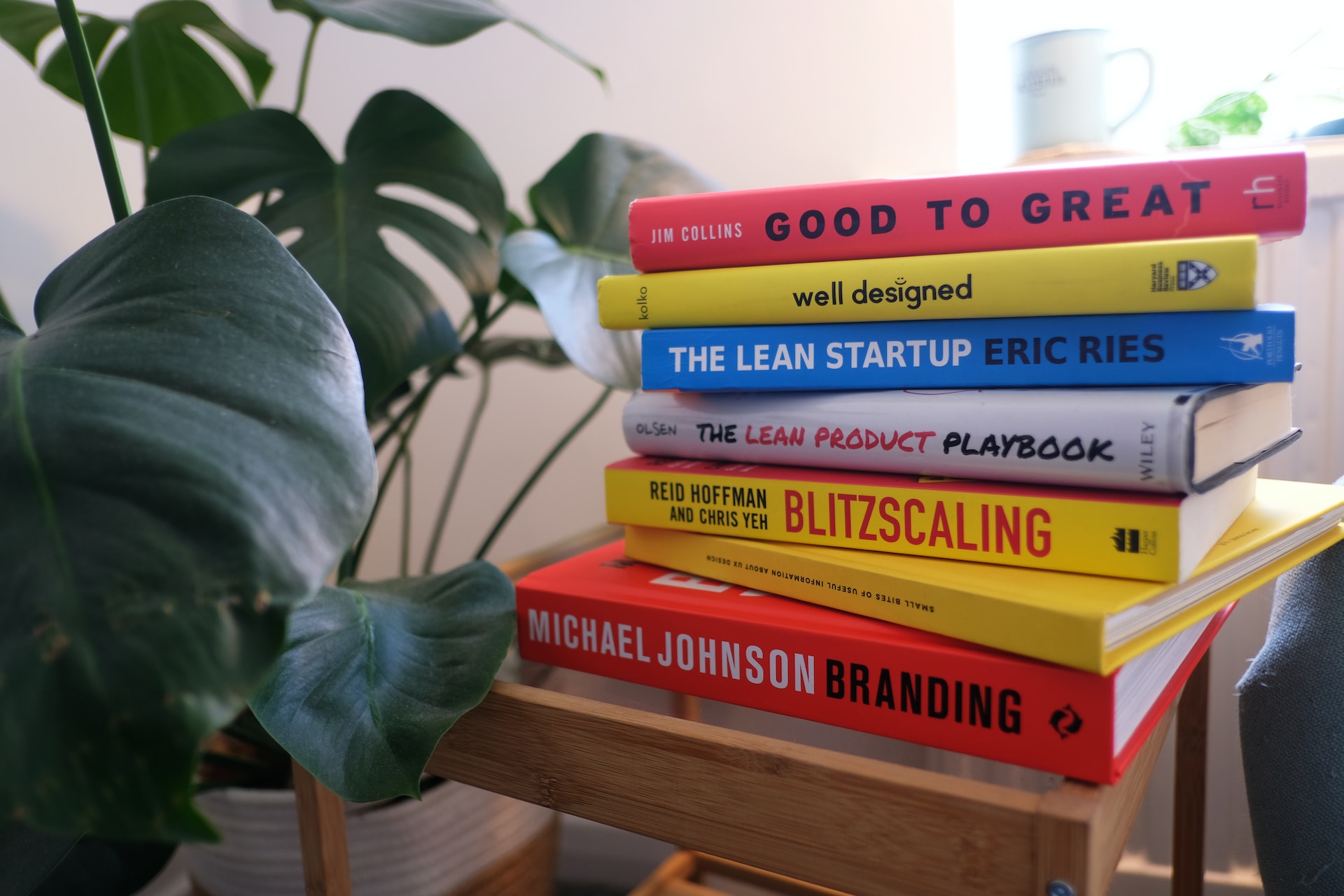
Photo by Jexo on Unsplash
You’ve probably heard of Lean Management. Maybe in a meeting where a consultant mentioned it with reverence. Or in a management article that promised to “revolutionize your organization.” Or in a job posting requiring “experience with Lean methodology.”
But what is Lean, really? Is it a miracle method for boosting productivity? A set of technical tools reserved for engineers? A Japanese management philosophy that’s hard to transplant into our Western cultures? An excuse to lay people off and “optimize”?
The answer is: all of this at once, and none of it. Lean Management is probably one of the most powerful and most misunderstood management approaches of the 21st century. Powerful because it has transformed entire industries and continues to inspire the most innovative organizations. Misunderstood because it is often reduced to caricatures – either idealized as a panacea, or demonized as a tool of dehumanization.
This article is designed for you, whether you’re a curious beginner or a professional who wants to understand Lean without falling into these extremes. We will explore together the fundamentals of Lean Management with an approach that is both rigorous and accessible, technical and human. We will untangle the myths from the reality, the tools from the underlying philosophy, and we will see how Lean, when authentically understood and applied, can be a lever for both efficiency AND humanity.
For 1Clusif, a humanist movement committed to reducing professional exclusion, this dual dimension is essential. Lean must not be just another tool serving a blind productivist logic. It can and must be practiced in a way that values everyone’s intelligence, fosters inclusion, and creates organizations that are more just while being more high-performing.
Ready for this journey? Let’s start at the beginning: the origins of Lean and why understanding its history sheds light on its present.
At the Origins of Lean: The Story Few Tell
Lean Management was not born in a business school or a consulting firm. It was born in a context of extreme constraint and necessity: Japan immediately after the Second World War.
Japan in Ruins: A Context of Absolute Scarcity
In 1945, Japan emerged from the war devastated. Infrastructure was destroyed, resources were scarce, the country was occupied. For Japanese companies like Toyota, there was no question of copying the American mass production model popularized by Henry Ford: this model requires colossal investments in machinery, vast storage spaces, and an abundance of materials – none of which Japan had.
Faced with this constraint, Taiichi Ohno, an engineer at Toyota, and Shigeo Shingo, an industrial consultant, developed a radically different approach: the Toyota Production System (TPS), which would later become what we call Lean Management.
The Conceptual Revolution: From Mass Production to Just-in-Time Production
Where Ford produced huge volumes by anticipating demand (even if it meant massive stockpiling), Toyota would produce just what is needed, when it is needed. Where Ford standardized to the extreme to reduce unit costs, Toyota would seek flexibility to respond to variations in demand.
But the deepest revolution was elsewhere: in the recognition of workers’ intelligence. In the Fordist model, workers were operators whose muscles alone were called upon. In the TPS, every operator became an intellectual contributor whose improvement ideas were not only welcomed, but systematically sought.
This recognition was not philanthropic – it was pragmatic. Ohno understood that those who do the work day-to-day know better than anyone how to improve it. Not tapping into this intelligence meant wasting the organization’s most precious resource.
“Exporting” to the West and the Misunderstandings
In the 1980s, as Toyota surpassed American automakers in quality and efficiency, MIT researchers studied the TPS and published “The Machine That Changed the World” (1990) and then “Lean Thinking” (1996). This is where the term “Lean” (thin, trim, without fat) was popularized.
But in this cultural translation, something is often lost: the human and philosophical dimension of the TPS. Western companies retain the tools (Kanban, 5S, Andon) but forget the foundations: respect for people, collective continuous improvement, recognition of operators’ expertise.
Result: many “Lean” implementations that are nothing but Taylorism 2.0 – more pressure, less visible waste, but still a rigid hierarchical structure where workers have no real power.
What Is Lean Management? Definition and Deconstructing the Myths
Now that we know the origins, let’s clearly define what Lean Management is (and is not).
Operational Definition
Lean Management (or Lean Thinking) is a management philosophy and a set of practices that aim to maximize the value created for the customer while minimizing waste (resources, time, effort that adds no value). This approach relies on the engagement of all members of the organization in continuous improvement of processes.
Myth 1: “Lean means doing more with less”
Lean means doing better by eliminating what adds no value. A crucial nuance. “Doing more with less” suggests simply squeezing people harder. Authentic Lean seeks to eliminate tasks that frustrate workers (unnecessary waiting, re-entering data, absurd bureaucratic processes) so they can focus on what actually creates value.
Myth 2: “Lean is for factories”
Born in the automotive industry, Lean has successfully expanded into services, software development, healthcare, public administration, education… Anywhere there are repetitive processes and value creation, Lean is applicable. Agile methods in software development are, moreover, strongly inspired by Lean.
Myth 3: “Lean is complicated and requires experts”
The basic principles of Lean are simple and intuitive. A 10-year-old understands the idea of eliminating waste. Certainly, some tools are technical, but the essence of Lean is accessible to everyone. In fact, in the TPS, it is the operators themselves who identify and solve the majority of problems – without being “Lean experts.”
Myth 4: “Lean necessarily leads to layoffs”
This is the most toxic deviation. In authentic TPS, efficiency gains are reinvested in improvement, innovation, or taking on new projects – never in headcount reduction. Toyota, moreover, has a long-standing no-layoff policy. If an organization uses Lean to justify layoffs, that is not Lean – it is a perversion of Lean.
Myth 5: “Lean eliminates all flexibility and spontaneity”
Paradoxically, Lean done well increases flexibility. By creating smooth processes and empowering teams, we reduce the need for hierarchical control and increase the ability to adapt quickly. Lean standardization is not a straitjacket – it is a stable base from which to innovate.
The Five Fundamental Principles of Lean: A Progressive Explanation
Lean rests on five interconnected principles. Let’s explore them in an accessible way, with concrete examples for beginners.
Principle 1: Define Value from the Customer’s Point of View
The Central Idea
Value is not what you think you are creating, but what the customer is willing to pay for. Everything else is potentially waste.
Concrete Example: The Coffee Shop
You walk into a coffee shop. What has value for you?
- Value: a tasty coffee, served at the right temperature, within a reasonable time, in a pleasant place
- Non-value (from the customer’s point of view): the time the barista spends filling out administrative forms, trips to fetch poorly organized ingredients, the wait because the register is broken
The customer pays for the coffee and the experience, not for the coffee shop’s internal inefficiencies. Lean seeks to eliminate these inefficiencies.
For Beginners: Start Simple
Take your own work. Ask yourself: “For which part of my work are my customers (external or internal) truly grateful? Which part frustrates them or leaves them indifferent?” This simple reflection is already Lean Thinking.
Principle 2: Map the Value Stream
The Central Idea
Identify all the steps in the process that turns a customer request into a delivered product/service. Distinguish the steps that create value from those that do not.
Concrete Example: Ordering a Pizza
Process steps:
- Customer places order by phone (2 min)
- Wait: order written on a sticky note that waits until the pizza maker is available (5 min)
- Preparing the pizza (8 min)
- Baking (10 min)
- Wait: pizza ready but delivery driver not yet back (7 min)
- Delivery (15 min)
Total time: 47 minutes. Value-added time: 35 minutes (order + preparation + baking + delivery). Wasted time: 12 minutes of waiting.
Mapping reveals where waste is hiding. If we reduce the waiting, we can deliver in 35 minutes instead of 47 – without working faster, just by eliminating dead time.
For Beginners: Try It at Home
Choose a recurring task (responding to a typical customer request, processing an invoice, preparing a report). List ALL the steps, even the “small” ones. You will be surprised to discover how many steps add no direct value.
Principle 3: Create an Uninterrupted Flow of Value
The Central Idea
Make the work flow smoothly, without interruptions, without stock sitting around waiting, without bottlenecks. The ideal: “one-piece flow” – one unit comes in, is processed, and goes out immediately.
Concrete Example: Laundry
Imagine doing your laundry:
“Batch” mode:
- You accumulate dirty laundry for 2 weeks
- One Saturday, you run 5 loads in a row
- You spend the day dealing with dirty laundry, wet laundry, laundry to hang, laundry to fold
- Result: a grueling day, lots of “stock” (laundry everywhere), risk of mixing up/losing items
“Flow” mode:
- You do a small load every 2-3 days when you have enough laundry of one color
- 15 minutes to start it, 15 minutes to hang it, 10 minutes to fold it
- Result: never a “laundry day,” little stock, a smooth process built into your daily life
Flow reduces stress and errors while speeding up the overall cycle.
For Beginners: Think “Small Batches”
In your work, prefer handling things as they come rather than accumulating large batches. Answer emails regularly rather than once a week. Make small, frequent deliveries rather than one big delivery every 6 months. You’ll see the difference.
Principle 4: Establish a Pull System
The Central Idea
Only produce what is actually requested, when it is requested. Let demand “pull” production, rather than “pushing” products hoping they will sell.
Concrete Example: The Supermarket
Push system:
- A supplier decides to deliver 100 jars of strawberry jam to the supermarket
- The supermarket stores them, even though it only sells 20 per week
- Result: tied-up capital, risk of spoilage, occupied storage space
Pull system:
- The supermarket has shelf space for 30 jars of strawberry jam
- When only 10 jars remain (the “reorder point”), an automatic order is triggered
- The supplier delivers exactly what has been consumed, no more, no less
- Result: minimal stock, always fresh, freed-up capital
For Beginners: Apply It to Your Priorities
Only start a new task when you have available capacity, not because it arrives in your inbox. This is the Kanban principle: limit work in progress (WIP) and “pull” new tasks only when you have finished the previous ones. You will see your stress decrease and your efficiency increase.
Principle 5: Pursue Perfection through Continuous Improvement (Kaizen)
The Central Idea
Perfection is never reached, but must always be pursued. Every day, look for small improvements. These micro-progresses accumulate to create major transformations.
Concrete Example: Learning a Language
“Revolution” approach:
- “Starting Monday, I’m going to study Spanish 2 hours a day!”
- You hold out for 3 days, then life takes over
- You give up, discouraged
Kaizen approach:
- “I’m going to do 10 minutes of Spanish every day, every single day”
- It’s sustainable, you build a habit
- After 3 months (90 days × 10 min = 15 hours), you’ve made real progress
- You adjust: “What if I moved to 15 minutes now?”
Kaizen favors small, sustainable changes over grand revolutions that burn out.
For Beginners: The 1% Rule
Try to improve a process by 1% every week. This seems modest, but over a year, that’s 50%+ cumulative improvement. And above all, it’s sustainable – you don’t exhaust yourself chasing the perfect revolution that will never come.
Waste (Muda): Learning to See It
A central concept of Lean is Muda (無駄), a Japanese term meaning “waste” or “futility.” Lean traditionally identifies seven types of waste (to which an eighth is often added). Learning to recognize them is a fundamental skill.
The 7+1 Wastes
1. Transport (unnecessary movement of things)
Example: A document that circulates between 5 offices to get signatures when 2 would suffice, or when an electronic signature would be possible.
2. Inventory (excessive stock)
Example: A team that accumulates 50 customer requests “to be processed later” instead of handling them as they come. These requests are stock that ties up attention and risks becoming obsolete.
3. Motion (unnecessary movement of people)
Example: A developer who has to walk 200 meters to ask their Product Owner a question several times a day because they are not co-located.
4. Waiting (time lost waiting)
Example: You’ve finished your part of the project but you have to wait 5 days for the manager’s approval before continuing. Those 5 days are pure waste.
5. Overproduction (producing more than necessary)
Example: Creating a 50-page report with detailed analyses when the decision-maker will only read the one-page summary. The 49 extra pages are waste.
6. Over-processing (doing more than necessary)
Example: Polishing a prototype for weeks to make it “perfect” when a rough prototype would be enough to validate the idea with users.
7. Defects (errors requiring correction)
Example: A software bug that requires 10 hours of correction when 30 minutes of upfront testing would have caught it. The later a defect is discovered, the more expensive it is to fix.
8. Underutilized talent (the 8th waste, added later)
Example: A senior developer who spends 80% of her time on administrative tasks instead of coding and mentoring. Her expertise is wasted.
Exercise for Beginners: The Muda Hunt
For a week, note every time you encounter one of these 8 wastes in your daily work. Don’t try to solve them yet – just to see them. This ability to detect waste is the first step toward eliminating it.
First Steps: How to Get Started with Lean
You now understand the principles of Lean. But how do you go from understanding to action? Here is a progressive path for beginners.
Step 0: Adopt the Lean Mindset
Before the tools, cultivate the mental posture:
- Curiosity: “Why do we do it this way?” instead of “We’ve always done it this way”
- Humility: “I don’t know everything, others have valuable ideas”
- Experimentation: “Let’s test it and see” instead of “Let’s plan perfectly before acting”
- Patience: “Small continuous improvements” instead of “Big revolutionary transformation”
Step 1: Choose a Simple Process to Improve
Don’t start by transforming your entire organization. Choose a process:
- That you know well
- That frustrates you or your customers
- That is repetitive (you do it often)
- That is relatively contained
Examples: handling a typical customer request, preparing monthly reporting, onboarding a new employee, managing your email inbox.
Step 2: Map (Simply) the Current Process
Take a sheet of paper (or a sticky-note board if you’re working as a team). List all the steps of the process, from A to Z. Be precise:
- What triggers the process?
- What is the first action?
- Who does what?
- Where are there waits?
- What marks the end of the process?
For each step, estimate how long it takes. Identify the steps that create value (VA) and those that don’t (NVA).
Step 3: Identify 3 Small Possible Improvements
Looking at your map, ask yourself:
- Are there unnecessary waits?
- Are there redundant steps?
- Are there movements (physical or of information) that could be avoided?
- Are there approvals that don’t really add value?
List 3 simple improvements that require neither budget nor hierarchical authorization. For example: “Organize documents differently to avoid searching” or “Create a template so you don’t have to redo everything each time.”
Step 4: Experiment with One Improvement
Choose the simplest of the 3 and test it for 2 weeks. Note:
- Is it faster?
- Is it less frustrating?
- Are there unexpected side effects?
This is the PDCA cycle (Plan-Do-Check-Act) in action: plan, do, check, act/adjust.
Step 5: Standardize and Iterate
If the improvement works, make it your new standard. Document it simply (a checklist, a note). Then look for the next improvement. Lean is an endless journey.
Step 6: Share and Learn from Others
Tell your colleagues about your experiments. Ask them how they handle this process. Maybe they’ve found other solutions? Lean thrives on sharing experiences. This is where collective intelligence comes into play.
Lean Tools for Beginners: Where to Start
Lean has a rich toolbox. Here are the most accessible tools to get started.
1. The 5S: Organizing Your Workspace
The 5S (Seiri, Seiton, Seiso, Seiketsu, Shitsuke – in English: Sort, Set in order, Shine, Standardize, Sustain) is a method for effectively organizing your work environment.
Concrete application: Is your desk (physical or digital) cluttered? Apply the 5S:
- Sort: Remove everything that isn’t used daily
- Set in order: Everything has a dedicated place, easy to access
- Shine: Keep it clean (delete obsolete files, etc.)
- Standardize: Create simple rules to maintain order
- Sustain: Make it a daily habit (5 min/day)
Result: you waste less time searching, you’re less stressed, you’re more efficient.
2. Personal Kanban: Visualize Your Work
Create a simple board with 3 columns: To Do | In Progress | Done. Represent each task with a card (sticky note or virtual card).
Golden rule: Limit the number of “In Progress” cards (for example: max 3). Only start a new task when you’ve finished another.
This simple tool gives you visibility into your workload, forces you to prioritize, and gives you the satisfaction of moving cards to “Done.”
3. The 5 Whys: Finding the Root Cause
Faced with a problem, don’t just treat the symptom. Ask “Why?” five times to reach the underlying cause.
Example:
- Problem: The project is late
- Why? Because the developers didn’t finish on time
- Why? Because there were a lot of bugs to fix
- Why? Because the specifications were unclear
- Why? Because the Product Owner and the developers don’t talk to each other enough
- Why? Because there’s no regular sync ritual
Solution: Set up a weekly 30-minute meeting. You have just solved the root cause rather than simply “pushing developers to work faster” (which would have solved nothing).
4. The Gemba Walk: Going to the Field
Gemba (現場) means “the real place” in Japanese. The Gemba Walk consists of leaving your office to go see how the work is actually done in the field.
If you are a manager: Don’t stay in your office. Go observe (without judging) how your teams work. Ask questions: “What’s blocking you?” “What frustrates you?”
If you are not a manager: Go see how your internal “customers” use what you produce. You will discover surprising things that never appear in emails.
Lean and Inclusion: A Natural Convergence
For 1Clusif, whose mission is to reduce professional exclusion, it is essential to see how Lean, when authentically practiced, can be a lever for inclusion.
Lean Values All Forms of Intelligence
In authentic Lean, every person – whatever their hierarchical level, seniority, or diploma – is recognized as an expert in their own work and a legitimate contributor to improvement. This recognition is deeply inclusive.
An operator who does the same task 50 times a day sees things the manager will never see. A person with a disability who has had to develop coping strategies brings valuable perspectives on the accessibility of processes. A junior who has just arrived asks “naive” questions that reveal absurdities that longtime employees no longer see.
Lean Fights Hierarchical Bias
In traditional organizations, ideas “climb” the hierarchy with difficulty. Only ideas carried by people with social power are taken seriously. Lean, with its practices of participatory continuous improvement, creates spaces where ideas are evaluated on their merit, not on the status of who proposes them.
Of course, this doesn’t happen automatically. A culture of psychological safety must be actively cultivated, one where people who are usually marginalized dare to speak up. This is where Nonviolent Communication and shared governance practices become allies of Lean.
Lean Eliminates Wastes That Weigh Particularly on Minorities
Certain wastes disproportionately affect vulnerable people:
- Opaque bureaucratic processes: harder to navigate for those who don’t know the implicit codes
- Unnecessary meetings: more costly for parents who have to pay for childcare
- Inaccessible tools: exclude people with disabilities
- Preferred informal communication: marginalizes those who are not part of informal networks
By eliminating this waste, Lean mechanically creates more inclusion.
Common Mistakes Beginners Make in Lean
Learning from your mistakes is important, but learning from others’ mistakes is even better. Here are common pitfalls.
Mistake 1: Starting with Tools rather than Philosophy
“We’re going to implement Kanban!” without understanding why or making sure the mindset follows. Result: bolted-on tools that don’t take hold.
Better approach: Start by cultivating curiosity, experimentation, respect for people. The tools will come naturally.
Mistake 2: Wanting to Change Everything at Once
“Starting Monday, we are a Lean organization!” This is the antithesis of Kaizen. Big revolutions often fail.
Better approach: Small continuous improvements. Start in one corner of the organization with volunteers.
Mistake 3: Applying Lean Mechanically
“Toyota does it this way, so we have to do the same.” But Toyota has a specific context, a culture developed over 70 years. Copy-pasting doesn’t work.
Better approach: Understand the principles, then adapt them to your context. Lean must be customized, not copied.
Mistake 4: Forgetting the Human in the Quest for Efficiency
“We’ve eliminated all the dead time!” But now people are exhausted, stressed, burned out.
Better approach: Sustainable efficiency includes well-being. “Dead time” includes necessary moments of recovery and socializing. Don’t eliminate all of it.
Mistake 5: Using Lean to Justify Unpopular Decisions
“Lean says we must eliminate waste, so we’re cutting headcount.” This is a perversion.
Better approach: Authentic Lean reinvests gains in improvement, innovation, people’s development – never in layoffs.
Lean and Agile Methods: Close Cousins
If you’re interested in Lean, you’ll quickly encounter agile methods (Scrum, Kanban, XP, etc.). What is the relationship between the two?
Common Roots
Agile methods, popularized by the Agile Manifesto (2001), are strongly inspired by Lean. The principles are very close:
- Deliver value frequently (continuous flow)
- Respond to change rather than follow a rigid plan (flexibility)
- Collaboration with the customer (defining value)
- Continuous improvement (Kaizen)
- Self-organized teams (respect for people)
Different Application Contexts
Lean was born in industrial production and applies well to repetitive processes with relatively stable customer value.
Agile was born in software development and applies particularly to creative projects with a lot of uncertainty and evolution.
But these boundaries are porous. Today, we talk about “Lean Software Development” and use Scrum in factories.
For Beginners: The Name Doesn’t Matter
Don’t get lost in semantic quarrels between “Lean” and “Agile.” Focus on the underlying principles, which are very similar: creating value, eliminating waste, continuously improving, respecting people.
Resources to Go Further
You now have a good understanding of the fundamentals of Lean. How do you go deeper?
On the 1Clusif Site
- Explore the 5 principles of Lean Management in detail with a humanist perspective
- Discover how distributed governance amplifies the benefits of Lean
- Understand the synergies between Lean and agile methods
- Learn Nonviolent Communication to create the psychological safety needed for Kaizen
Recommended Books for Beginners
- “Lean Thinking” by James Womack and Daniel Jones: The classic that popularized the term Lean in the West. Accessible and rich in examples.
- “The Toyota Way” by Jeffrey Liker: To understand the original philosophy of the TPS straight from the source.
- “2 Second Lean” by Paul Akers: Short, practical, inspiring. Shows how to apply Lean daily with “2-second” improvements.
Communities and Practice
Lean is learned through practice and exchange. Join communities (Lean meetups, online forums) to share your experiments and learn from others.
Conclusion: Lean as a Learning Journey
We have reached the end of this introduction. What should you remember?
Lean Management is not a miracle method, nor a set of recipes to apply mechanically. It is a management philosophy based on simple but profound principles: create value for the customer, eliminate waste, continuously improve, respect people.
These principles are universal and timeless. They apply just as well to a car factory as to a software startup, to a hospital as to a public administration, to a large company as to a freelancer organizing their own work.
But – and this is crucial – these principles only bear fruit if applied with authenticity and humanity. A Lean that dehumanizes, that intensifies work without respite, that serves as a pretext for layoffs, is not Lean – it is its perversion.
For 1Clusif, authentic Lean is a lever for inclusion: it values everyone’s intelligence, fights hierarchical bias, eliminates the waste that weighs particularly on vulnerable people. But this promise is only fulfilled if we are vigilant and intentional in our practice.
Your Lean journey starts here, but it never really ends. Every day brings its share of small possible improvements. Every problem encountered is a learning opportunity. Every person you meet potentially has a brilliant idea you didn’t have.
So, start small. Choose a process that frustrates you. Map it. Identify a waste. Experiment with an improvement. Measure the result. Share with others. And start again.
That’s Lean. Simple in its essence, rich in its practice, transformative in its cumulative effects.
Welcome to the journey. We hope this guide has given you the foundations to begin it with confidence and clarity. The rest, you will learn by walking – because Lean, like anything worthwhile, is learned through experience.
Kaizen! (改善 – Change for the better)