
In the first article of this series on learning, I questioned difficulty: “do we necessarily have to go through gruelling phases for knowledge to truly take hold?”
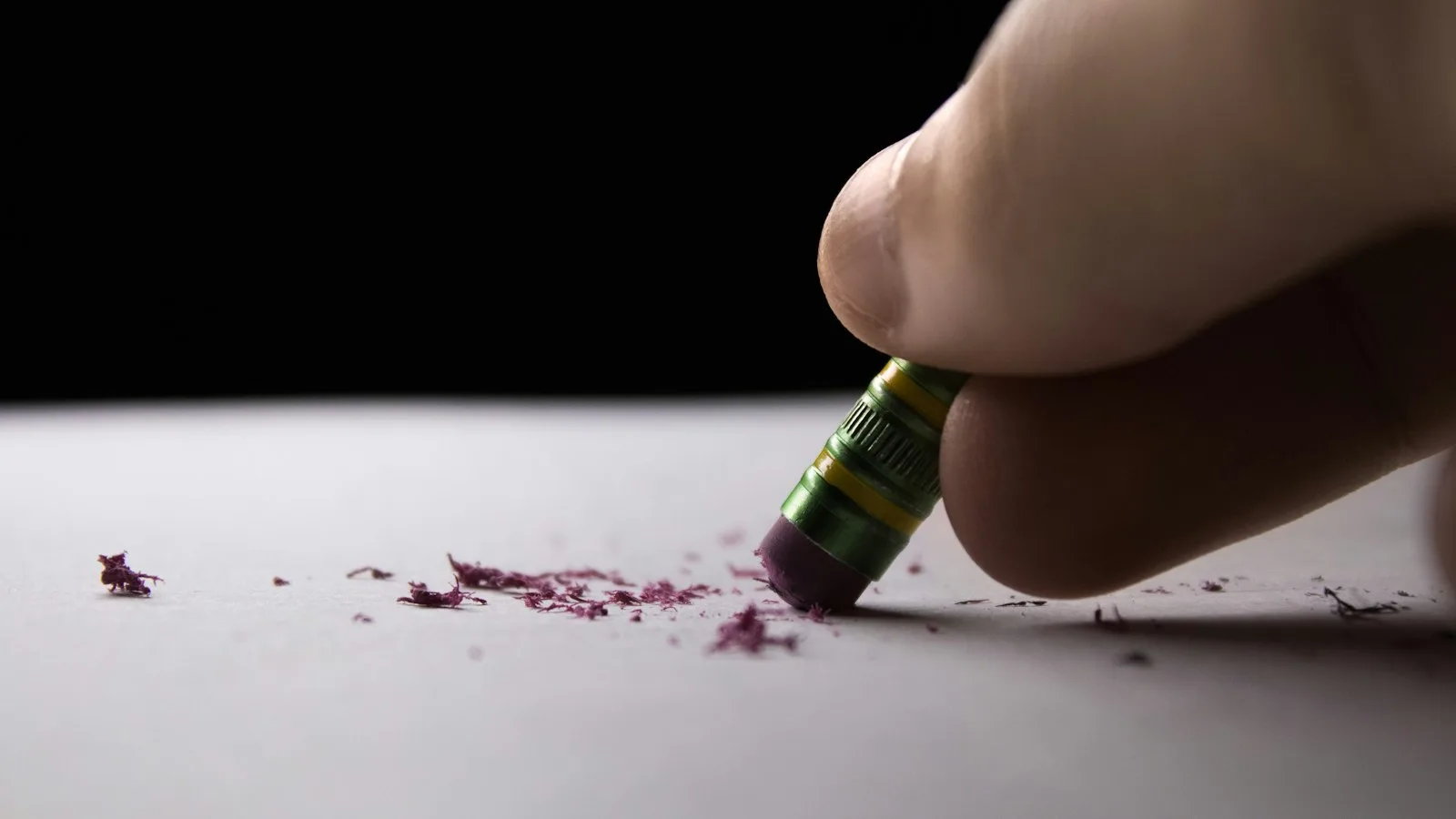
This second article extends that reflection by looking at a related but distinct notion: the mistake. What are its real virtues? Does it foster learning, or can it hold it back instead?
A mistake tolerated differently across cultures
We talk a lot about mistakes, without always measuring how much their acceptance varies from one culture to another. In some environments, a mistake is received as an ordinary step along the way. In others, it systematically points to a fault, a personal shortcoming, to the point of bordering on shame, as if genuine performance meant precisely never getting anything wrong.
This observation is not merely intuitive. The French educational theorist Jean-Pierre Astolfi, in his now-classic book on error as a teaching tool, showed that education systems which treat mistakes as a simple fault to be punished produce more fragile learners than those that use them as a window into the student’s reasoning. In a comparative vein, the work of American psychologist James Stigler on mathematics teaching highlighted a striking contrast between certain Asian and American classrooms: in the former, a student can spend long minutes at the board searching, getting it wrong, starting over, without this triggering any particular discomfort in them or their classmates, whereas in the latter, a public mistake is experienced as a social exposure to be avoided at all costs.
This is exactly the point I want to stress. It seems to me that a mistake becomes a facilitating factor in learning from the moment it generates little or no frustration, and instead sparks the desire to use that experience to progress. If I grew up in an environment that stigmatizes and devalues mistakes, I risk feeling a negative emotion, frustration, perhaps even anger or shame, and none of these affects help me learn. Conversely, if I have internalized that a mistake is an almost unavoidable step in any learning process, I will be able to use it to spot, in some future situation, the signals telling me that I might be reliving that situation and risking repeating it.
This intuition echoes more recent work in the psychology of learning. Carol Dweck showed that people who perceive intelligence as a fixed capacity interpret failure as a verdict on their worth, while those who perceive it as a capacity that develops interpret it as information to be used. This distinction echoes what I explore elsewhere about the growth mindset and positive affirmations, where every mistake becomes precisely an opportunity to learn rather than a verdict. Education researcher Manu Kapur went further by documenting what he calls productive failure: under certain conditions, letting learners grapple with a problem before teaching them the method to solve it, even if they fail at first, produces a deeper and more lasting understanding than direct instruction of the solution.
Normalizing mistakes rather than praising them
The point here is not to value mistakes for their own sake, nor to make a case for them. It is rather to see them as a normal process in any construction. Take the example of computer code: it is by running through countless iterations, and therefore potentially countless mistakes, that we make progress in building a program. Each corrected mistake tightens a little further the gap between what we meant to do and what we actually produced, a process I describe at greater length in my account of AI and 40 years of code.
This idea rests on solid epistemological ground. Gaston Bachelard argued that the scientific mind is not built by accumulating truths, but through the permanent correction of prior mistakes: we never come to know against nothing, we always come to know against a previous piece of knowledge, which must first be identified as insufficient or false. Karl Popper, for his part, made refutation the very engine of scientific progress: a theory does not advance because it is confirmed, but because it is put to the test and its mistakes, once spotted, allow a better one to be formulated. In both cases, a mistake is not a regrettable accident of reasoning, it is one of its moving parts.
What artificial intelligence takes away from us
I come, as in the first article, to the role of artificial intelligence. It relieves us of a large share of our mistakes. Following that reasoning through to the end, these experiences of making mistakes will be missing from the way we build our knowledge.
I should clarify that this observation rests solely on my own experience, and let’s be honest, a still-recent experience, since generative artificial intelligence has only been used on a massive scale for three or four years. So this is credit I am granting these systems, even though I think they keep improving. This sketches out a possible double bias. By experiencing mistakes less and less, we probably become less vigilant toward them. And at the same time, we trust algorithms based on our first experiences, which lead us to believe they get things wrong fairly rarely overall.
This phenomenon is not unique to generative AI. Journalist Nicholas Carr, in his essay on automation, describes how airline pilots, by dint of delegating flying to automated systems, gradually lose part of their manual reflexes, which makes them more vulnerable at the exact moment automation hands back control and a mistake becomes possible again. Human-factors researchers speak, in a related vein, of automation bias: the tendency to grant a machine disproportionate trust relative to its actual reliability, precisely because it rarely gets things wrong before our eyes. What I describe here about AI and learning may therefore be just a new variation on a phenomenon already well documented elsewhere.
Rediscovering mistakes in real life
Here again, as with difficulty in the first article, it seems to me that it is in real life that we can keep experiencing mistakes and enriching our experience. Sports, the arts, or entrepreneurship let us experience failure in an embodied way, with real consequences and a body genuinely engaged.
Essayist Nassim Nicholas Taleb, whom I have already discussed in relation to responsibility and risk, proposed the notion of an antifragile system to describe what does not merely withstand a shock, but grows stronger because of it. A muscle, an immune system, a seasoned entrepreneur, all belong to this category: deprived of any exposure to stress, failure, or mistakes, they weaken rather than being preserved. This may be exactly where the two notions of difficulty and mistake meet most clearly: in real situations, the kind that carry a genuine risk of getting it wrong and therefore a genuine opportunity to learn.
We are fortunate to have tools of unprecedented power at our disposal, and personally, I want to keep using them. But I am just as keen to keep confronting difficulty and mistakes, with my eyes open. Perhaps it is by deliberately choosing more demanding situations, and therefore ones carrying a higher risk of error, that we will keep growing, without giving up what artificial intelligence brings us. That is, in any case, the vision I have of a successful collaboration between humans and AI: not a total delegation that would deprive us of mistakes, but a deliberate use, one that willingly leaves room for real experience. One more nuance, like difficulty, in how we build our own Adaptation Coefficient.
Note to the reader. I fully own the fact that I use artificial intelligence to write these articles, to add historical or scientific references that, for the most part, I do not have. Conversely, all the ideas developed and the positions taken are mine, and the text is entirely produced by me. This subject is currently generating a great deal of debate and may well become the topic of a future article.
Related articles: